
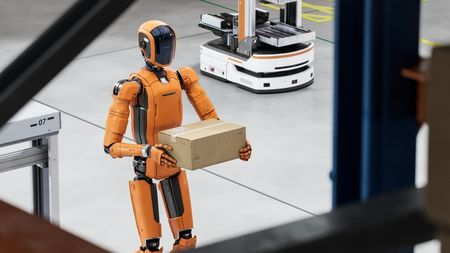
Physically Safe: Extending Functional Safety for Humanoids and Physical AI
Humanoids are moving from labs into factory and warehouse pilots, but the safety rules have not caught up. Functional safety standards such as ISO 26262 and IEC 61508 keep electronics operating correctly when faults occur. They were not written for a machine that walks, makes decisions with AI models, and works within arm’s reach of people. Keeping the electronics alive is necessary, but it does not make the robot physically safe.
Humanoid-specific standards, including ISO 25785-1, are still in draft. Teams building robots today have to make safety architecture decisions before the rules are final.
This session looks at how functional safety needs to expand to cover four areas:
- Device integrity: fault detection, redundancy, and freedom from interference in the compute and control electronics
- Operational safety: safe motion, force limiting, and a predictable safe state for a robot that cannot simply power off without falling
- Ethical and AI behavior: keeping AI-driven decisions inside defined, auditable limits
- Human interaction: safe, predictable operation in close proximity to people
The session maps these areas to a practical architecture: R-Car SoCs for perception and AI compute, RH850 MCUs as an independent safety controller, and RZ/T and RA MCUs for motor and joint control. It shows which safety functions belong in silicon and which belong in the system.
Attendees will leave with a checklist of safety architecture decisions to make now, and the questions to track as humanoid standards are finalized.

